A street light is not built by choosing a high-wattage LED and attaching it to a pole. The manufacturer must match the LED package, optics, heat path, driver, enclosure and surge protection to the road geometry and local weather. By the end, you will know which build details, test documents and procurement figures to compare before approving an outdoor project.
Key takeaways
- Match LED bins and operating current across the entire road project.
- Choose optics from road width, mounting height and spacing—not wattage alone.
- Specify driver controls, surge protection and wiring before production begins.
- Request sealing, impact and electrical test records before approving bulk delivery.
From LED package to finished light engine
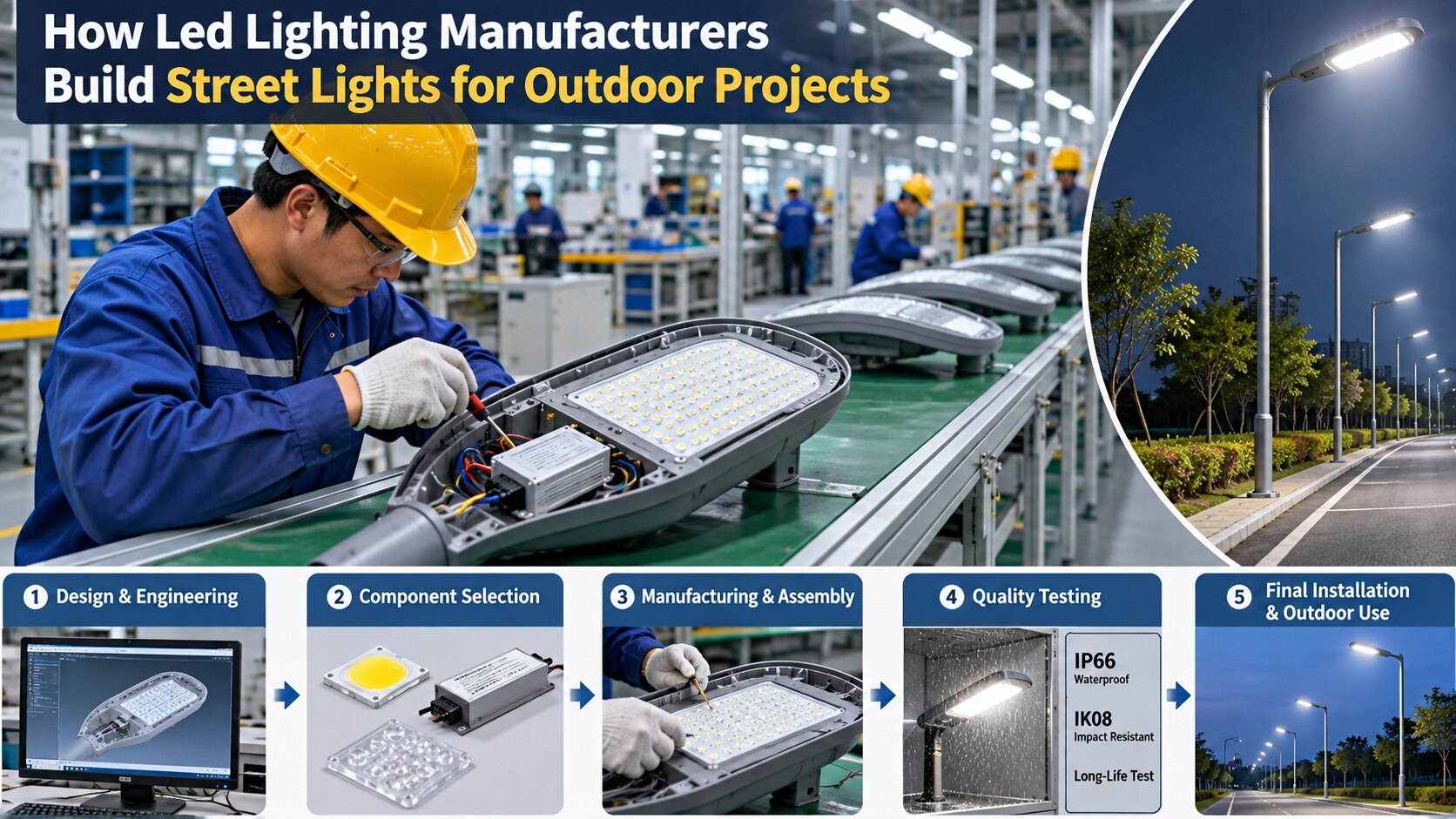
Assembly starts with the LED package, not the housing. The manufacturer selects the brand, package, colour temperature, colour rendering index, lumen output, binning range and rated operating current, then mounts the matched LEDs on an aluminium printed circuit board. Inconsistent bins can produce visible colour and output differences across one road.
- Solder the LED board using controlled reflow, then inspect solder joints and electrical output. A loose joint creates flicker or an early open circuit.
- Attach the board to the housing with a flat thermal interface material and specified screw pressure. The aluminium body spreads heat away from the LED junction; poor contact raises temperature and accelerates lumen depreciation.
- Fit the driver and connect it to the board with keyed, strain-relieved wiring. The design must state the drive current and ambient-temperature range, including thermal derating that protects LEDs and electrolytic capacitors.
- Install the road optic, such as Type II, III, IV or V, with its lens and alignment features. The optic converts LED output into a controlled distribution rather than simply increasing brightness.
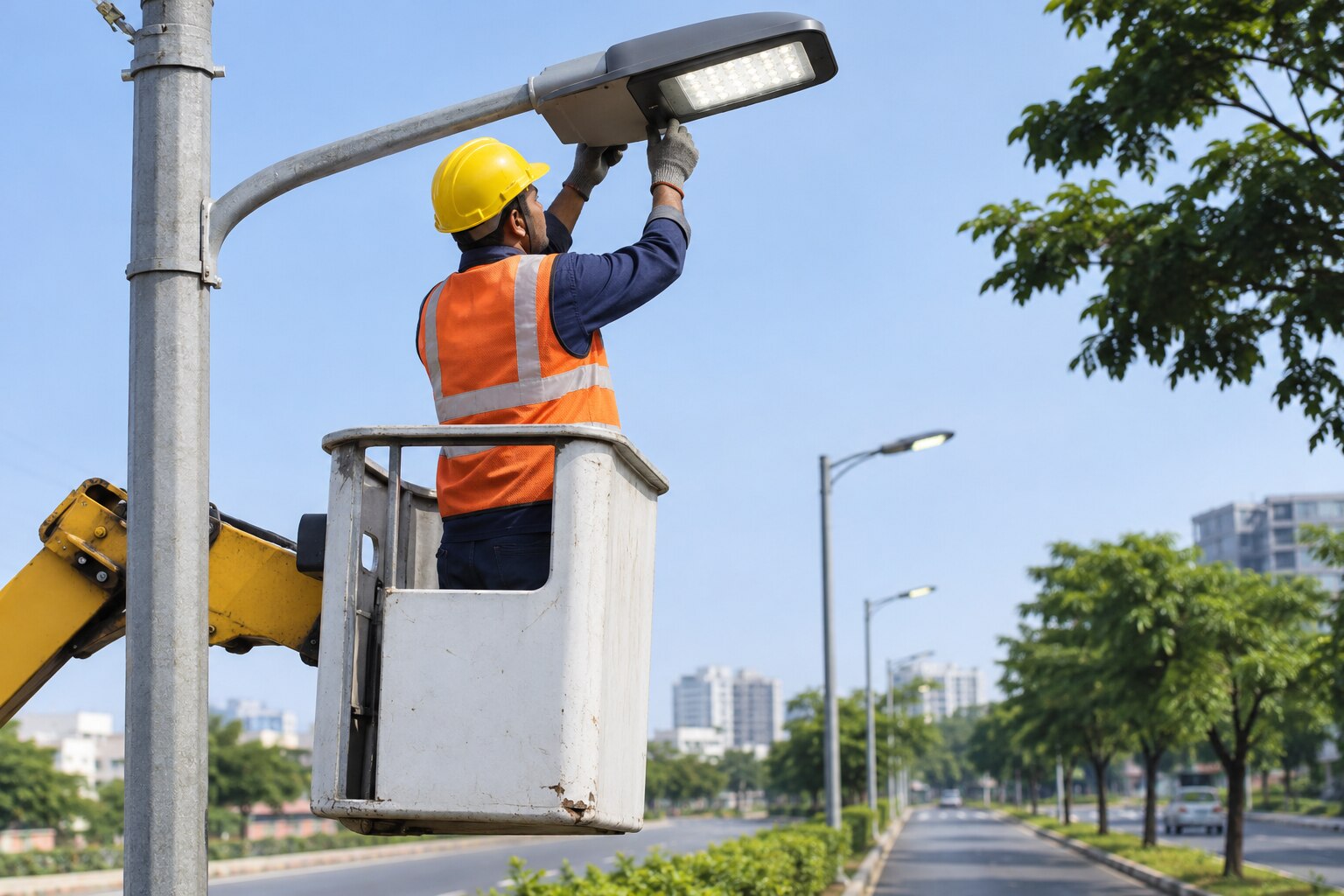
- Close the die-cast aluminium housing with a gasket, breather, fasteners and any serviceable module interface. Sealed integrated construction reduces joints, while replaceable boards and drivers simplify repairs when spares remain electrically compatible.
The finished fitting is measured as a complete luminaire: delivered lumens and luminaire efficacy in lm/W after driver, optical and thermal losses. A search for led lighting manufacturer mumbai should therefore include requests for identical replacement modules, optics, drivers and gaskets across the bulk order, not just a wattage figure.
Why road geometry matters more than wattage
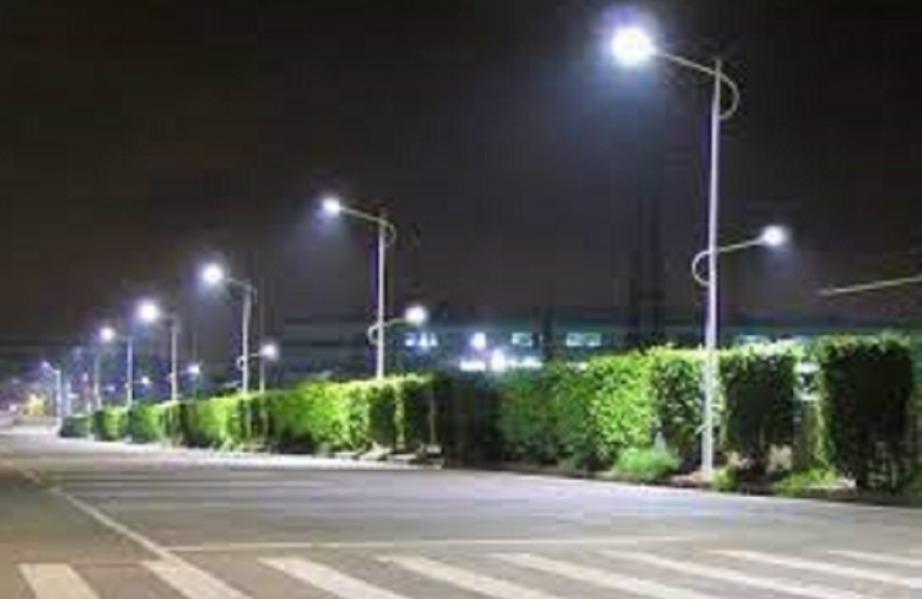
A road light earns its wattage only when its optics place light uniformly across the actual carriageway. A commercial street lighting manufacturer begins with mounting height, pole spacing, setback, road width, lane arrangement and the project’s required average illuminance or luminance.
The optical distribution is selected for that geometry:
- Type II spreads light along narrower roads and paths near the pole line.
- Type III throws light farther across wider carriageways.
- Type IV projects light forward from perimeter-mounted poles.
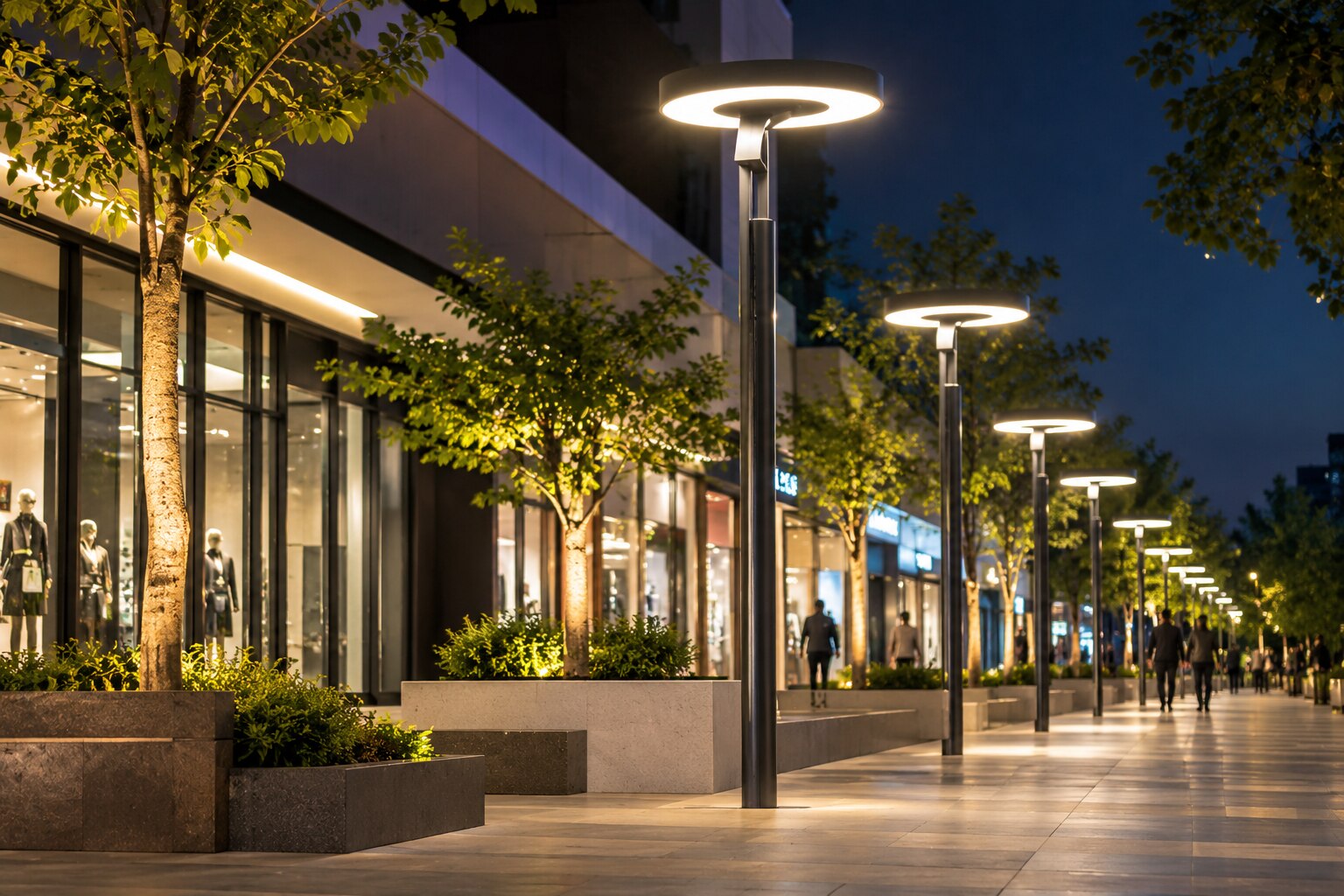
- Type V creates a roughly circular pattern around the mounting point.
The manufacturer then adjusts lens selection, LED layout and luminaire tilt in photometric software. The calculation checks average level, longitudinal and overall uniformity, threshold increment for disability glare, and spill light beyond the road.
Change the pole spacing or mounting height, and the same fitting can produce dark gaps, excessive brightness near poles or glare for drivers.
Nominal lumens do not predict this result. Compare maintained lumens from the complete luminaire after driver losses, optical transmission losses and thermal derating, then review its photometric file and road-layout calculation. LED package efficacy alone can hide a weak delivered output.
A 100-watt luminaire with the wrong beam can illuminate less useful road area than a lower-wattage fitting with the correct distribution. Keep every bulk-order fitting on the same LED bin, optic, tilt setting and driver output; mixing visually identical units can destroy the uniformity promised by the original design.
Driver wiring, controls and surge protection
A driver is selected at the luminaire input, not from its wattage label alone. The production specification records nominal voltage and frequency, power factor, total harmonic distortion, inrush current, standby power, over-temperature response and the full ambient range. High housing temperatures can force current reduction, protecting LED junctions and driver capacitors.
Control wiring must match the driver and project controller. Confirm whether dimming uses 0–10 V, DALI, a photocell socket or a relay, then verify polarity, cable length, isolation and fail-safe behaviour. If the controller fails, the light should default to a defined operating level rather than switch off across a road.
Surge protection is a system requirement, not a “10 kV” sticker. Ask for the specified line-to-line and line-to-earth surge waveform and level, the SPD’s residual voltage, connection mode, earthing arrangement and upstream fuse or breaker. A replaceable SPD eases maintenance; an internal device improves packaging but can turn a failure into a luminaire repair.
For Mumbai monsoon service, wiring entries need sealed glands, strain relief and a pressure-equalisation arrangement that does not admit rain. Specify these procurement checks:
- Driver replacement compatibility across the entire batch
- SPD status indication or a documented replacement method
- Insulation, earth-continuity and functional tests after assembly
- Matching photocells, connectors and control settings
A buyer comparing an LED street light supplier in Mumbai should demand wiring diagrams, driver datasheets and surge-test records, not just a claimed protection rating.
Sealing, impact resistance and validation tests
A die-cast aluminium housing with a UV-resistant powder coating gives a street light a useful heat path and protects it from rain, sunlight and handling. Use stainless-steel fasteners and a replaceable silicone or EPDM gasket; a painted steel enclosure can work, but exposed cut edges and poor drainage invite rust.
IP66 is a sensible baseline for road luminaires: it means dust-tight construction and resistance to powerful water jets. It does not prove resistance to impact, corrosion or condensation.
| Rating | What it proves | What it does not prove |
|---|---|---|
| IP66 | Dust-tight enclosure and water-jet protection | Impact, corrosion or condensation resistance |
| IK08 or IK09 | Resistance to specified mechanical impact | Sealing or long-term ultraviolet exposure |
| LM-80 and TM-21 | LED package or module lumen-maintenance data and its projection | Complete-luminaire service life |
Ask for the IEC 60529 ingress-test report and IEC 62262 impact-test report, not only rating labels. The file should also identify the tested luminaire, gasket, lens, housing and production revision.
A credible qualification record includes IEC 60598-1 and IEC 60598-2-3 safety testing, dielectric-strength and earth-continuity results, thermal cycling, vibration, surge, and corrosion evaluation such as salt-mist testing. Check the stated ambient range and thermal report: junction and driver-component temperatures determine durability more than air temperature alone.
For a buyer searching for an led lighting manufacturer for street lights in mumbai, request sample-based production records for ingress, electrical safety and photometry. They expose a changed gasket, LED bin, lens or driver before inconsistent fittings reach the road.
What to verify before ordering a bulk production run
Before approving bulk LED street lights, require a signed production specification and a retained reference sample. Compare manufacturers against the same road layout, not against wattage or catalogue photographs. An LED lighting manufacturer Mumbai buyers shortlist should identify who controls component changes, keeps spares and supplies test records for the exact configuration quoted.
| Construction choice | Advantage | Risk to verify |
|---|---|---|
| Sealed integrated luminaire | Fewer joints and strong sealing | A failed driver or LED board may require complete replacement |
| Serviceable module and driver | Parts can be replaced without removing the pole fitting | Check gasket replacement, connector ratings and spare-part availability |
| Mixed or substituted configuration | May reduce immediate cost | Different optics, LED bins or driver settings can change uniformity and invalidate calculations |
Request these items before releasing the purchase order:
- A controlled datasheet stating LED package or module, CCT, CRI, delivered wattage, efficacy, optical distribution, driver make and model, IP and IK ratings, surge level and operating-temperature range.
- The photometric file for the exact fitting, plus calculations showing mounting height, spacing, setback, maintained illuminance or luminance and uniformity.
- A production sample tested for wattage, power factor, CCT, light output and optical distribution against the approved reference sample.
- Reports covering dielectric strength, earth continuity, ingress, thermal cycling, vibration, surge and corrosion evaluation.
- A change-control clause requiring approval before replacing an LED bin, lens, driver, gasket or housing material.
- Warranty exclusions, failure definitions, spare-driver and module availability, and the ambient temperature and lumen-maintenance basis behind any “50,000-hour” claim.
Inava Instruments International can be compared fairly only after it supplies this same evidence as every other bidder.
Related products
 | Led Outdoor Lights An LED street light is an integrated light that uses light emitting diodes (LED) as its light source. View product → |
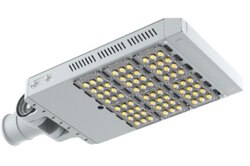 | Supply by us is a quality-approved range of LED fixtures for both outdoor and indoor lighting. View product → |
Frequently asked questions
Why does road geometry matter when selecting LED street lights?
Road width, pole height, pole spacing, mounting angle and lighting targets determine the optic and light distribution. Wattage alone cannot prevent dark patches, glare or wasted light.
What should a street light driver specification include?
Specify input voltage and frequency, output current, dimming method, control wiring, power factor, surge protection rating and protection against short circuit, overvoltage and overheating.
Which tests help validate an outdoor LED street light?
Check records for ingress protection, impact resistance, thermal performance, electrical safety, surge immunity, lumen output, colour consistency and the stated operating-temperature range.
What should you verify before ordering bulk LED street lights?
Approve a production sample, confirm the LED package and binning, review photometric files, inspect driver and surge-protection details, and define acceptance tests and documentation.
Related products
 | We are an acknowledged name in this domain who is engaged in offering a wide array of LED Street Lamp. View product → |
 | ledlights Manufacturer | Ac Street Light Dealer Introducing the AC Street Light by Inava Instruments – your ticket to a brighter, greener future. View product → |
Keywords